Introduction
If you have ever visited a science museum, you have likely stood in awe watching a Foucault pendulum slowly trace its path across a circular dial. This elegant demonstration, first devised by French physicist Léon Foucault in 1851, provides direct visual evidence that our planet is rotating beneath our feet. While museum installations can be massive, with high ceilings and meticulously engineered pivots, you can replicate the experiment at home with surprisingly simple materials. In this article, we will guide you through constructing your own miniature Foucault pendulum and show you how to measure Earth's rotation using little more than a weight, some fishing line, and a camera.
Historical Background
What is a Foucault Pendulum?
A Foucault pendulum is a long pendulum free to swing in any vertical plane. As the pendulum oscillates, the plane of its swing appears to rotate relative to the ground. In reality, the pendulum's plane remains fixed in space (ignoring tiny perturbations), while the Earth rotates beneath it. This apparent rotation depends on your latitude: at the North Pole it would complete a full 360-degree turn in 24 hours, at the equator it would not rotate at all, and at intermediate latitudes it rotates at a rate given by 360° × sin(latitude) / 24 hours.
Why Build Your Own?
Constructing a personal Foucault pendulum is a fantastic way to engage with classical physics and experiment design. It also teaches careful measurement and error analysis, as the effect is small and easily masked by imperfections. The build is inexpensive and requires no specialized equipment — just a trip to a sporting goods store and a bit of patience.
Materials and Setup
What You Will Need
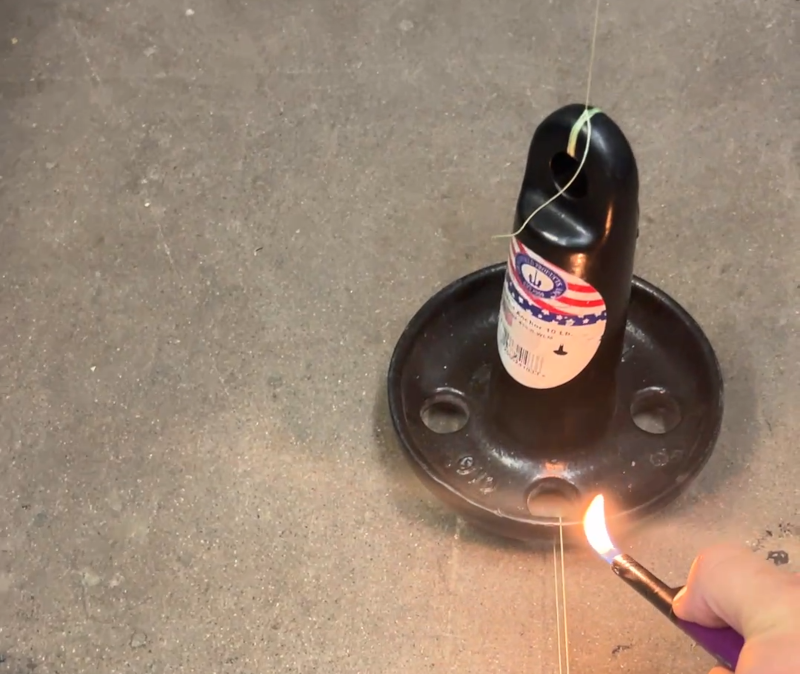
- A heavy weight — A small mushroom anchor (often used for fishing) works perfectly because it is dense, symmetrical, and easy to suspend. Alternatively, any heavy, symmetric object like a metal ball or a large nut.
- Fishing line — Strong, thin, and low-stretch line minimizes friction and keeps the pendulum swinging for a longer time.
- A swivel — Attached at the top to prevent the line from twisting and to ensure the pendulum can rotate freely.
- An eye hook — Screwed into a ceiling joist or sturdy beam to provide a fixed suspension point.
- A camera — To record the pendulum's motion over several hours (a smartphone with a time-lapse feature works well).
- A lighter or flame source — Used to release the pendulum cleanly with no sideways impulse.
- A thread — To hold the pendulum in a stationary position before release.
Assembling the Pendulum
First, locate a suitable place with a high ceiling — at least 8–10 feet is recommended to get a long period and clear rotation. Install the eye hook securely into a ceiling joist. Tie one end of the fishing line to the swivel and the other end to the weight. Attach the swivel to the eye hook. Ensure the weight hangs freely without touching any walls or furniture. The pendulum should be as long as possible for best results.
The Release Technique
A critical part of a Foucault pendulum is releasing it without imparting any sideways force. A simple method involves tying a thread to the weight and pulling it to one side, then holding that thread taut. Once the weight is motionless, burn the thread with a lighter. The thread will break instantly, and the pendulum will begin swinging in a clean plane. This technique avoids the tiny pushes that would occur if you simply let go with your hand.
Calculating the Expected Rotation
Your pendulum's rotation rate depends entirely on your latitude. The formula is:
Rotation rate = (360° / 24 hours) × sin(latitude)
For example, at 33° north latitude, the expected rotation is about 360° × sin(33°) / 24 ≈ 8.17° per hour. You can look up your latitude using a GPS or online map. Over a few hours, the pendulum's plane should rotate by a measurable angle. To observe this, place a reference mark (like a tape line on the floor) directly under the pendulum at rest, then note the direction the pendulum swings relative to that mark at the start and after a set time.
Measuring the Rotation
Using a Camera
Set up your camera on a tripod aimed at the pendulum. Use a time-lapse mode that takes a photo every few seconds. After several hours, compile the frames into a video or stack them in photo editing software (like Photoshop) to see the plane's gradual rotation. Measure the angle between the initial swing direction and the final direction using the software's measuring tools. Compare it to the theoretical value.
Potential Sources of Error
In practice, your measurement may differ from the theoretical prediction — often by a noticeable margin. Common error sources include:
- Air currents — Even a gentle breeze can disturb the pendulum.
- Friction at the pivot — The swivel and line introduce some drag.
- Elliptical motion — If the release imparts a tiny sideways push, the pendulum will eventually precess in an ellipse, distorting the rotation.
- Measurement inaccuracies — Manually aligning and measuring angles from photos introduces human error.
- Building vibrations — Foot traffic or nearby machinery can affect the swing.
For this reason, museum Foucault pendulums are often large, use low-friction magnetic or knife-edge suspensions, and include an electromagnetic drive to keep the pendulum swinging indefinitely. Your small version will be more sensitive, but that only makes the observation more interesting.
Conclusion
Building your own Foucault pendulum is a rewarding project that brings a classic physics demonstration into your home. With simple materials and careful technique, you can watch the Earth rotate beneath a swinging weight. Even if your measurements are off, you gain hands-on experience with experimental physics, error analysis, and the beauty of a 170-year-old experiment. If you manage to refine the setup and reduce errors, Léon Foucault would surely be proud. And do share your results with the community — your insights might help others achieve even greater accuracy.